Nature Biotechnology (2026)
Mapping and engineering the human cell-cell interactome
Di Carlo D, Morsut L, McCain ML, Wright HJ, Abedi M, Yamada-Hunter SA, Zhang JZ, Backus K, Chung E, Wang Y, Rando TA, Cai L, Thomson M, Elowitz MB, Lee JK, Witte O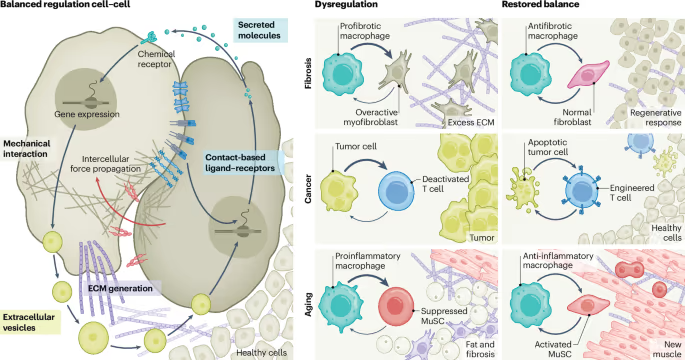



Tiny engineered particles that act as scalable laboratories for single cells, molecules, and cell-cell interactions.
Many important biological functions are difficult to measure because they occur at the level of individual cells, rare cell states, or transient interactions between cells. The Di Carlo Lab develops lab-on-a-particle technologies that use engineered hydrogel microparticles as microscale test tubes for biological assays.
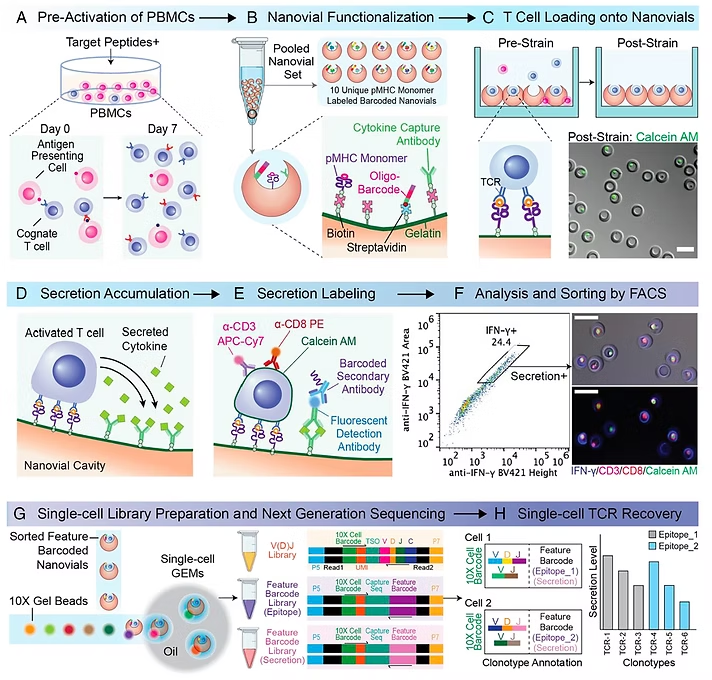
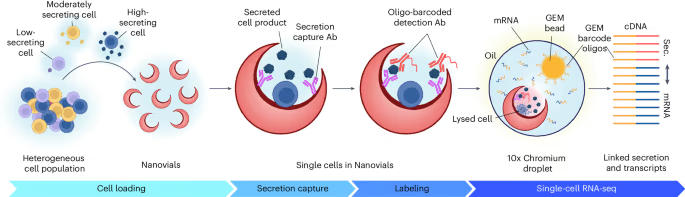
Nanovials are one example of this approach. These particles contain functionalized cavities that can capture cells and their secreted products, allowing researchers to sort cells based on what they do rather than only what they express. By linking secreted proteins, cell growth, binding, or interaction phenotypes to downstream sequencing, nanovials enable new forms of functional single-cell and single-cell dyad analysis.
Our lab has used these platforms to develop SEC-seq, which links single-cell secretions with transcriptomes; to discover antibody-secreting cells and antigen-specific T cells; to support immune profiling; to optimize engineered cell therapies; and to profile cell-cell interactions through Cell-Cell-seq. The broader goal is to make sophisticated single-cell and cell-cell assays accessible using standard tools such as flow cytometers, cell sorters, and droplet-based single-cell sequencing systems.
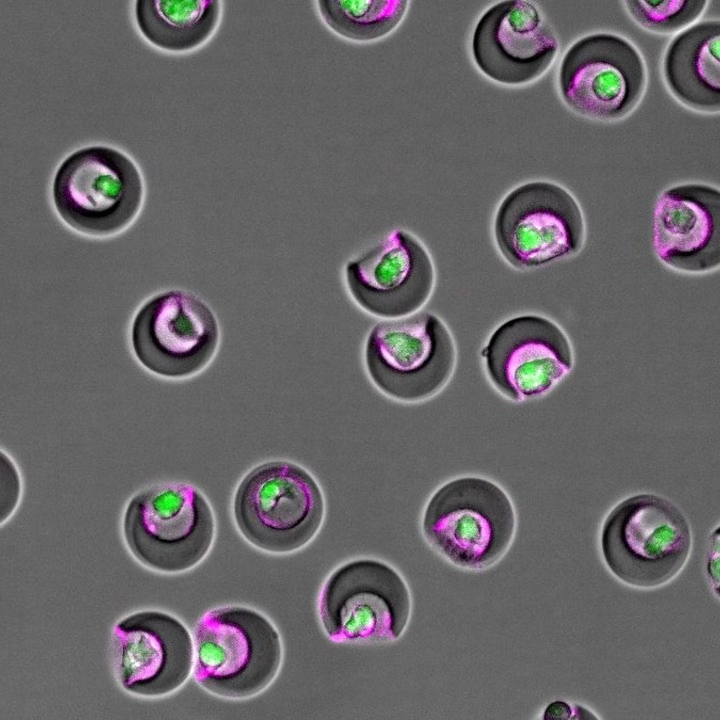
Cells rarely act alone. They exchange signals, form physical contacts, instruct immune responses, regulate tissue repair, and drive disease progression through dynamic interactions with other cells. The Di Carlo Lab’s nanovial and Cell-Cell-seq platforms are designed to make these interactions measurable at scale by capturing defined cell pairs, linking interaction outcomes to molecular state, and enabling downstream single-cell sequencing.
These technologies contribute to the broader Billion Cell×Cell Project, an effort to build functional maps of how cells communicate, respond, and change one another across biological systems.
Nature Biotechnology (2026)
Nature Protocols (2025)
Nature Nanotechnology (2024)
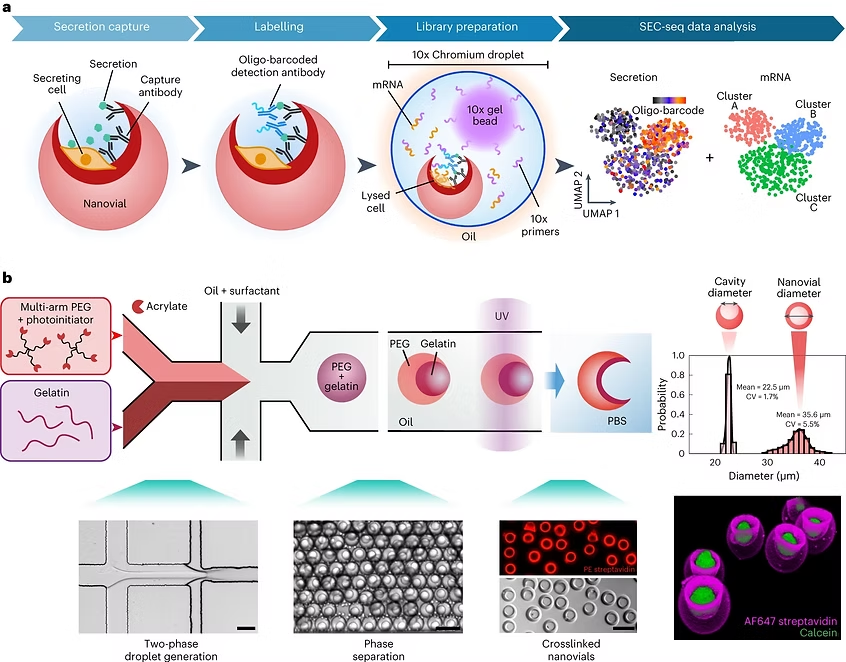
Nature Communications (2023)
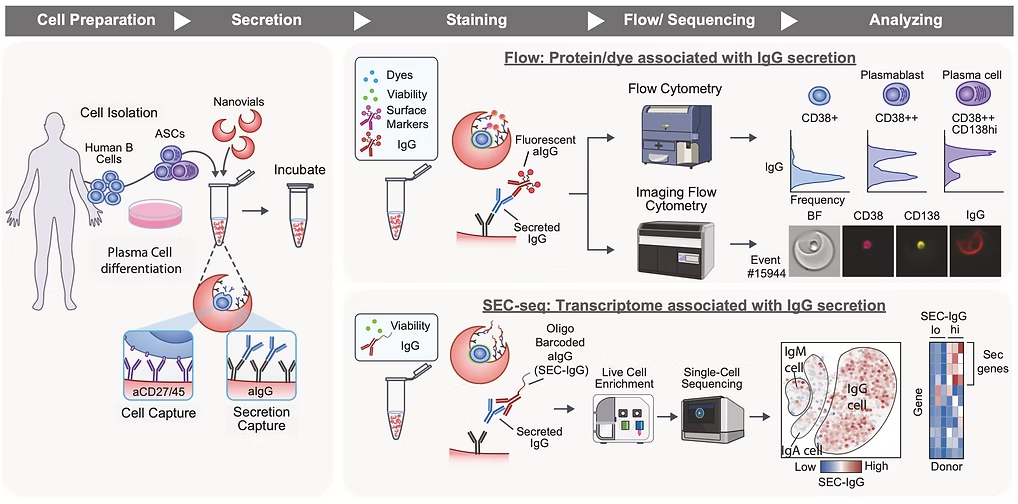
Nature Communications (2024)
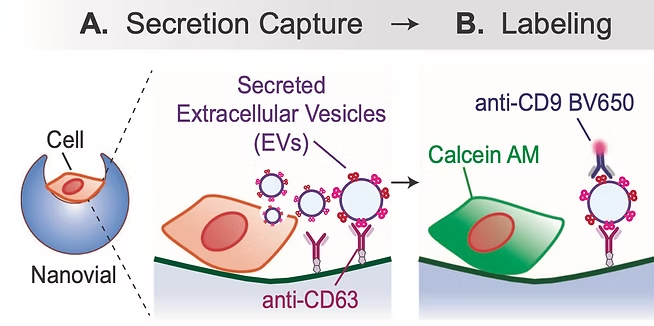
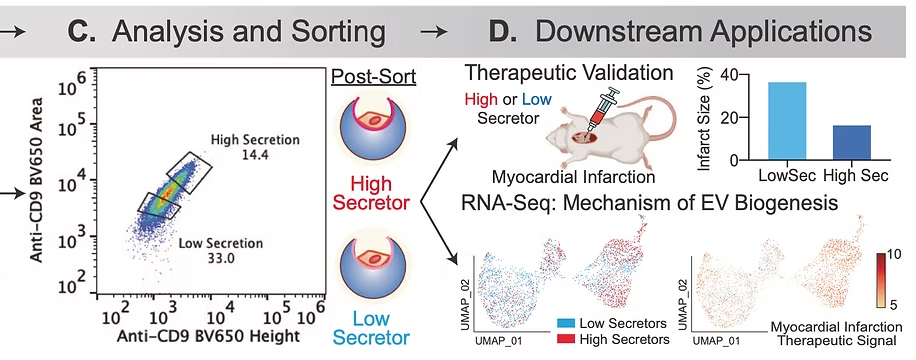
PNAS (2024)