


Nature Protocols (2025)
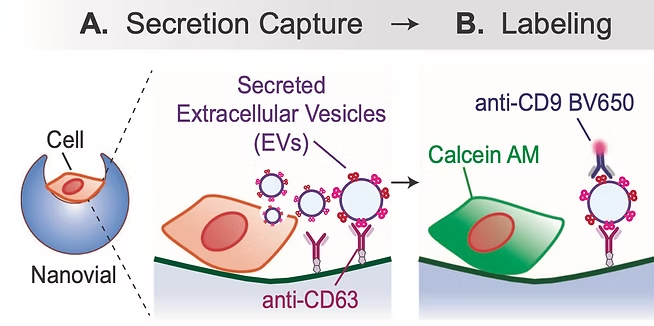
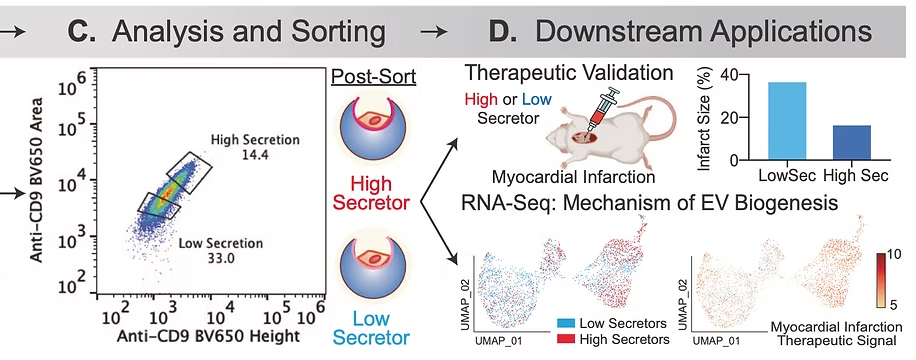
Linking single-cell transcriptomes with secretion using SEC-seq
Langerman J, Baghdasarian S, Cheng RYH, James RG, Plath K, Di Carlo D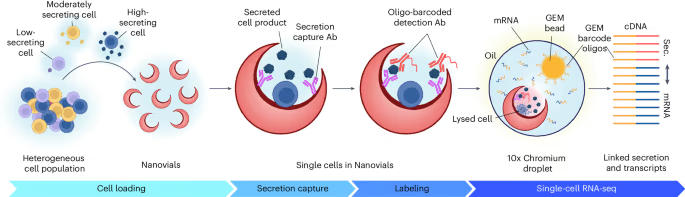



Microfluidics, particles, automation, and diagnostics for the next generation of biotechnology and medicine.
The Di Carlo Lab develops micro- and nanotechnology platforms that make advanced biological measurements more scalable, accessible, and useful for medicine. We engineer particles, fluids, materials, and instruments to measure single cells and molecules, organize cell-cell interactions, automate experiments, and detect disease earlier.
Our work is driven by a central idea: many of the most powerful tools in biotechnology should not require highly specialized infrastructure. By embedding assay complexity into engineered particles, low-cost devices, and distributed platforms, we aim to democratize technologies for cell therapy, immune discovery, diagnostics, regenerative medicine, and automated science.
Our technologies also contribute to larger efforts to map how cells communicate, including the Billion Cell×Cell Project, a community-scale initiative to build functional maps of cell-cell interactions.
Learn More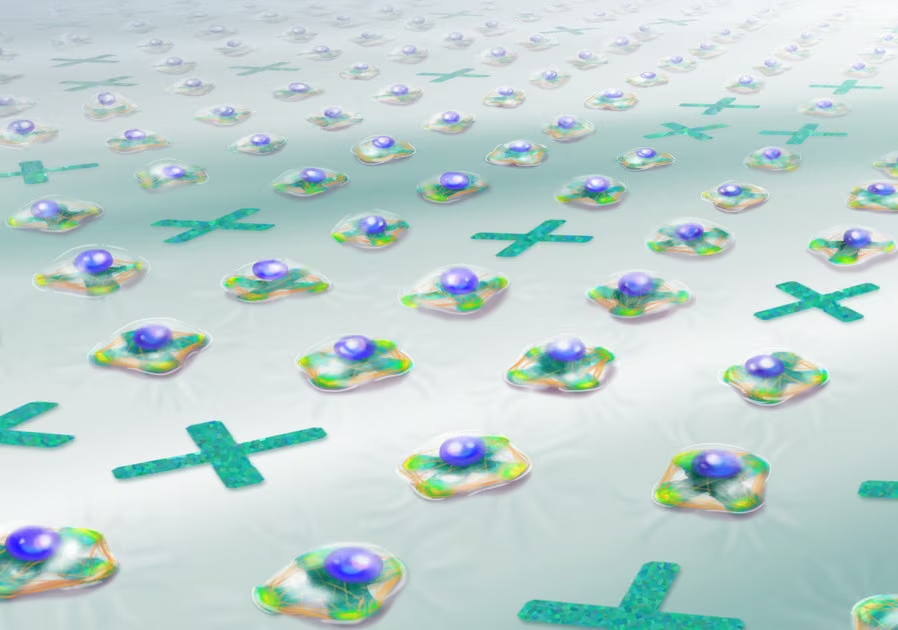
The Di Carlo Lab at UCLA Bioengineering develops technologies at the interface of microfluidics, biomaterials, nanotechnology, automation, and translational medicine. We focus on building tools that reveal how cells behave, communicate, and change, and on turning those tools into practical platforms for diagnostics, therapeutics, and biological discovery.
Since its founding, the lab has pioneered fields including inertial microfluidics, high-throughput cell deformability measurement, microporous biomaterials, ferrobotics, and lab-on-a-particle technologies. These advances have contributed to new scientific fields, high-impact publications, issued patents, and startup companies translating UCLA-developed technologies into clinical and industrial use.
Learn MoreMeasure, automate, deploy
The Di Carlo Lab has a long history of translating engineering discoveries into technologies that improve human health and accelerate biotechnology. Lab inventions have contributed to multiple startup companies, including Cytovale, Partillion Bioscience, Tempo Therapeutics, Saku Biosciences, and Forcyte Biotechnologies.
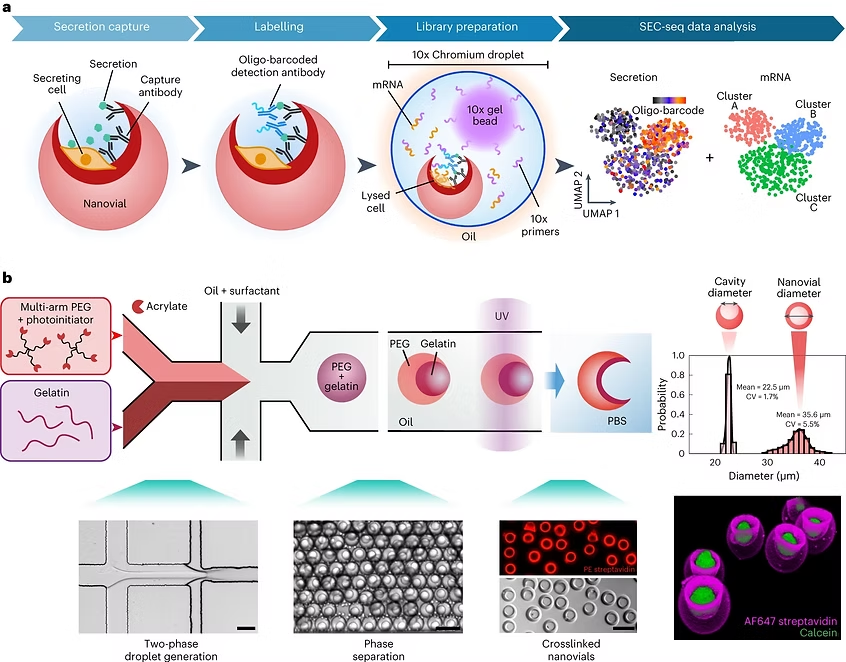
Cytovale’s IntelliSep™ test, based on deformability cytometry invented in the Di Carlo Lab, is the first FDA-cleared diagnostic test for early sepsis detection that uses the mechanical properties of cells as a clinical biomarker. Nanovial technology, invented in the lab, is being commercialized by Partillion Bioscience, expanding access to single-cell functional screening for antibody discovery, cell therapy development, cell-cell interaction profiling, and immune repertoire analysis. Microporous annealed particle biomaterials developed in the lab are advancing clinically through Tempo Therapeutics, including a completed first-in-human study showing safety and promising wound-healing outcomes.
Explore TranslationNature Protocols (2025)
Nature Nanotechnology (2024)
Nature Communications (2024)
Nature Communications (2024)
PNAS (2024)
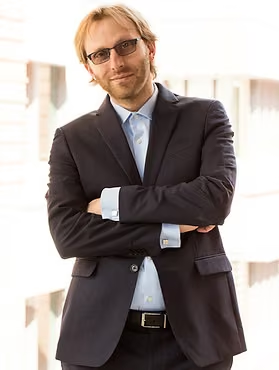
Dino Di Carlo is Professor and Chair of Bioengineering at UCLA and the Armond and Elena Hairapetian Endowed Chair in Engineering and Medicine. His laboratory develops micro- and nanotechnology platforms that make advanced biological measurements more accessible, scalable, and translatable. His work spans lab-on-a-particle technologies, single-cell analysis, cell-cell interaction profiling, automated science, distributed diagnostics, and regenerative biomaterials.
Di Carlo’s inventions have contributed to multiple commercial technologies, including Cytovale’s FDA-cleared IntelliSep™ test for early sepsis diagnosis, Partillion Bioscience’s nanovial platforms for functional single-cell screening, Tempo Therapeutics’ microporous biomaterials for tissue repair, and Forcyte Biotechnologies’ platforms for mechanobiology-based drug discovery. He has authored more than 200 original research articles, is an inventor on 80 issued patents, and has co-founded or advised multiple companies translating UCLA technologies into clinical and industrial use.
We welcome collaborators interested in using lab-on-a-particle technologies, automated experimental systems, and cell-cell interaction assays to accelerate their research and contribute to larger efforts such as the Billion Cell×Cell Project.
Contact UsDi Carlo Lab technologies have contributed to FDA-cleared diagnostics, clinical-stage biomaterials, commercial single-cell analysis products, and platforms used across academia, biotechnology, and pharmaceutical research.
Nanovial and Cell-Cell-seq platforms are designed to capture defined cell pairs, measure interaction outcomes, and connect functional behavior to molecular state.
Ferrobotics and lab-on-a-3D-printer systems point toward lower-cost, programmable laboratory workflows for research, diagnostics, and education.
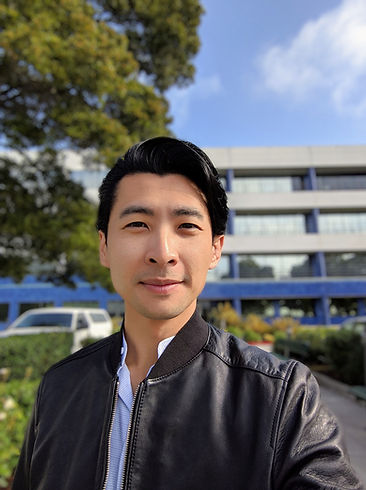
Chief Technology Officer
Cytovale, Inc
Dino is a dream PI. Purposeful science, patient when the experiments do not go as planned, and encouraging when the data takes you another direction.
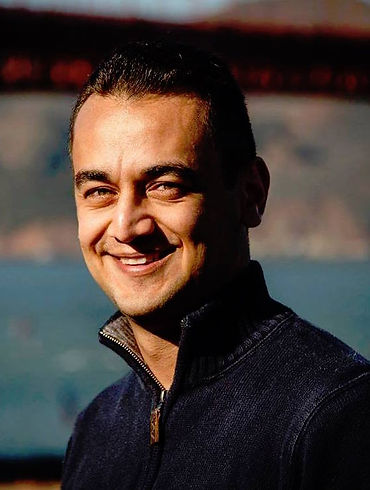
Co-founder and CEO of Hepta
The mentorship from Dino and the team Di Carlo transformed me from an engineer focusing on how to make things work to an innovator remembering why we are trying to make things work.

Clare Booth Luce Assistant Professor
Johns Hopkins University
Dino is a fantastic mentor who empowers his students to achieve their greatest potentials while providing enough freedom for creativity to spark.